
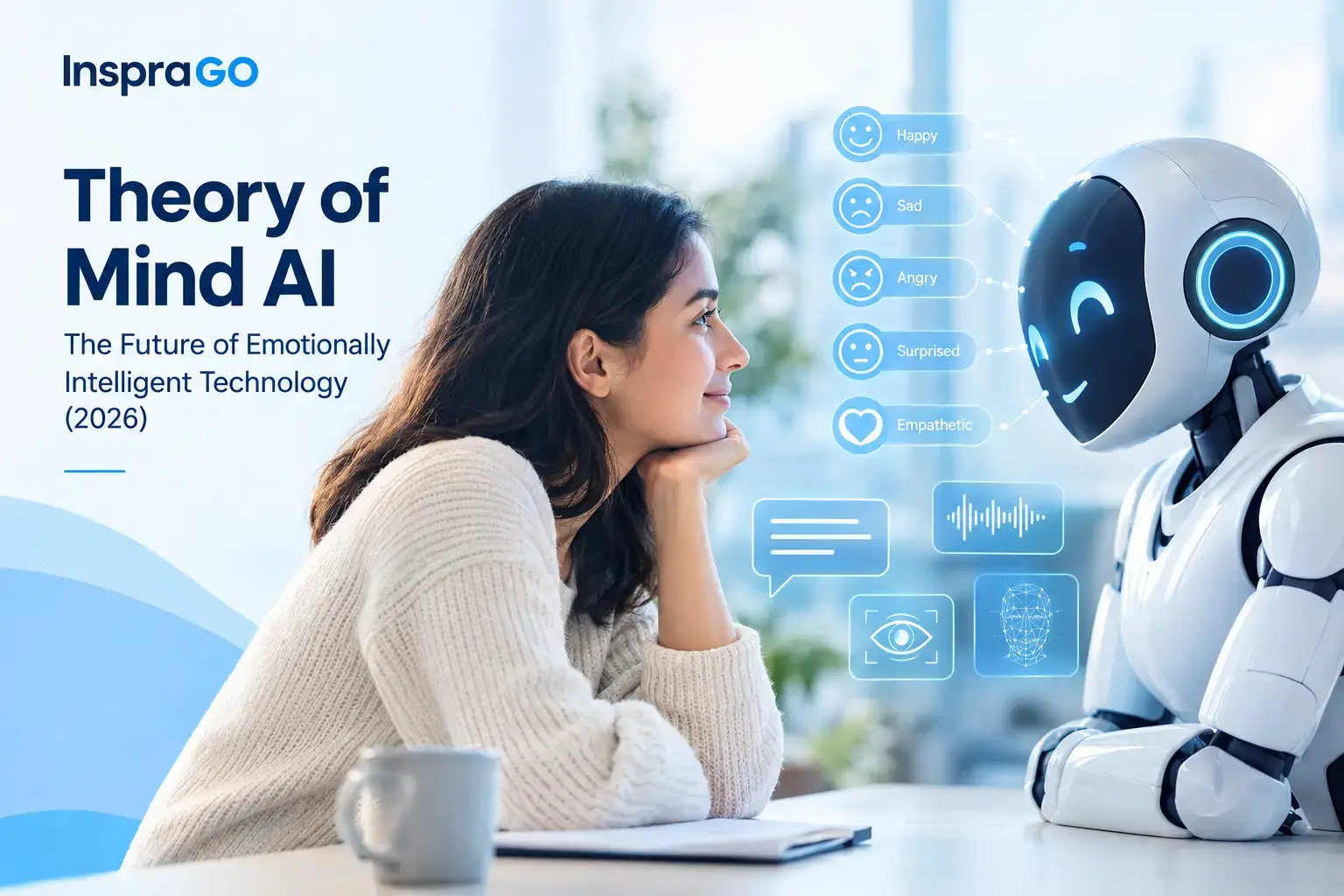


What is Theory of Mind AI? (Core Answer)
Simply put, Theory of Mind AI is a next-generation form of artificial intelligence built to recognize, interpret, and predict human emotions and mental states. Traditional AI follows pre-programmed rules and patterns, but Theory of Mind AI goes further by modeling how humans think and feel in real time.
By evaluating voice tone, facial expressions, and text context, this technology allows machines to respond with genuine empathy and understanding.
Understanding Theory of Mind in Human Terms
To understand Theory of Mind AI, think about how humans interact. In psychology, “Theory of Mind” is our natural ability to realize that other people have their own thoughts, feelings, and goals. It is what helps us show empathy when a friend is sad or predict how someone will react.
Now, scientists are teaching machines to do the same thing. Theory of Mind AI allows computers to understand human psychology and social cognition rather than just processing cold data.
The Technology Behind Theory of Mind AI
Building emotionally aware machines requires combining multiple smart tools together:
- Natural Language Understanding (NLU): To read tone, mood, and sentiment in typed text.
- Facial Recognition & Eye Tracking: To detect subtle micro-expressions on human faces.
- Voice Pitch & Emotion Algorithms: To catch changes in speech tone when someone is angry or happy.
- Affective Computing: Using affective computing standards to help machines measure and react to emotional signals.
Why Theory of Mind AI Matters for the Future
Traditional AI is smart, but it lacks emotional connection. It hears what you say, but it does not understand how you feel. Theory of Mind AI bridges this gap and brings several clear benefits:
- Accurate Predictions: It anticipates what a user needs before they explicitly ask.
- Better Mental Support: It powers therapy apps that offer empathetic language.
- Smoother Customer Support: It helps bots adjust their tone when a customer is frustrated.
- Safer Autonomous Vehicles: Self-driving cars can read pedestrian hesitation or anxiety.
Real-World Applications of Theory of Mind AI
Although this technology is still developing, we can already see early examples in action:
- Therapy & Mental Health Apps: Chatbots that use empathetic active listening techniques.
- Smart AI Tutors: Educational tools that slow down when a student looks confused.
- Customer Service Bots: Systems that route calls to human managers when user anger rises.
- Social & Healthcare Robots: Robots designed to comfort elderly individuals or assist people on the autism spectrum.
Key Challenges in Developing Theory of Mind AI
Even with rapid progress, researchers face several big hurdles:
- Complex Human Emotions: Emotions vary across different cultures and individual personalities.
- Data Bias: Emotion datasets can carry cultural bias.
- Privacy Concerns: Tracking facial expressions raises serious questions about data privacy and AI ethics.
- High Computing Power: Real-time emotional analysis requires massive processing energy.
Conclusion: Collaborate with Digital Experts
Empathy is no longer just a human trait; it is becoming a technological requirement. Theory of Mind AI will transform how businesses interact with their customers, creating deeper connections and better brand loyalty.
At Insprago, we keep your business ahead of digital trends. Check out our SEO and AI marketing services to learn how we help brands adapt to emerging technologies and improve search visibility in Dubai and across the globe.