
Artificial intelligence (AI) is used in our daily lives, from smartphones to large businesses. But have you ever wondered how this technology works? Here are the 4 types of AI in technology, with an explanation of each.
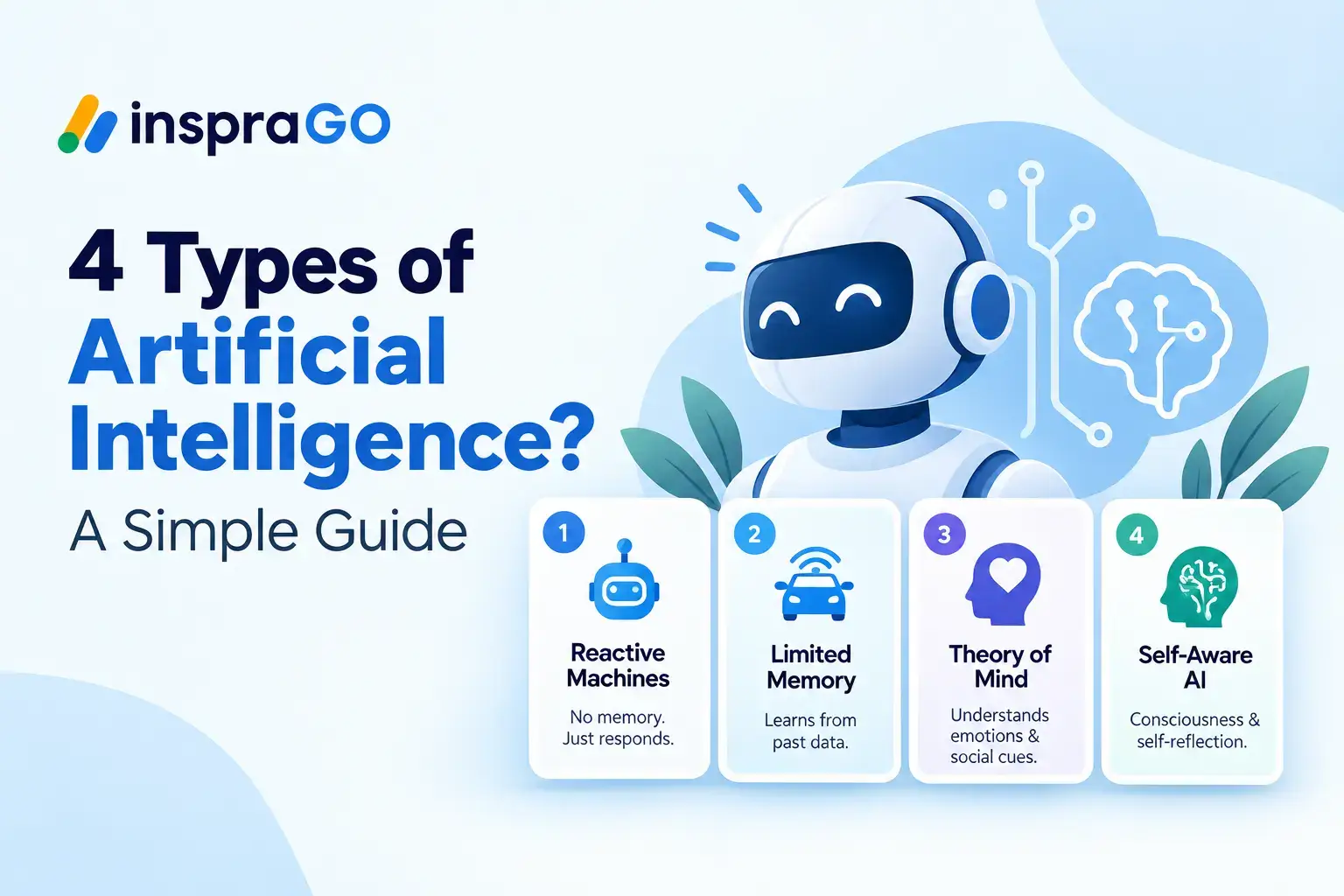
1. Reactive Machines: The first machines without any memory
This is the earliest and simplest form of AI. They lack the memory to think for themselves or learn from past experiences. They only respond to whatever command we give them.
Key Features:
- No ability to remember old things.
- No ability to learn.
- Only instructions given will be done correctly.
Example : A good example of this is IBM’s ‘Deep Blue’ chess playing computer that wowed the world. Although it could quickly calculate and play hundreds of thousands of moves, it could not learn lessons from previous games.
2. Limited Memory : Those who work by remembering past events
Unlike reactive machines, these systems can remember data for a short time. Therefore, they can make better decisions by considering what happened in the past.
Key features:
- Learn from past information and data.
- Get smarter over time.
Example: Self-driving cars that we see on the road. They monitor the surrounding vehicles and the road conditions through sensors and drive based on previous experiences.
3. Theory of Mind : The Age of Understanding Emotions and Intentions
This is the next stage of AI. Although it is not yet fully developed, research is underway. These will be machines that can accurately understand human emotions, desires, and social interactions.
Key expectations:
- Recognize emotions like humans.
- Speak and interact more naturally.
Example: In the future, mental health bots that provide comfort to those suffering from mental difficulties or robots that help take care of the elderly will fall into this category.
4. Self-Aware AI : AThe final stage of self-awareness
This is the final and most futuristic stage of AI development. Machines at this stage will have their own consciousness, the ability to introspect, and the ability to form their own opinions, just like humans.
Key features:
- Will be aware of their own existence and surroundings.
- Will make their own decisions.
Currently, there is no AI in the world that has reached this stage. This is just a future goal for scientists.
01
Will AI Replace Digital Marketers ? The Truth Businesses Need to Know
With AI growing so much, the biggest question that comes to people’s minds is “Will AI replace digital marketers?” Or will AI take over the jobs of digital marketers?
.In reality, AI is not a threat that will eliminate human jobs. Instead, AI is just a great engine that helps you get through boring, repetitive tasks like collecting data, preparing large reports, and creating small drafts of copy very quickly.
But it takes human intelligence to recognize the true value of a brand, to build emotional connections with customers, and to make big strategic decisions. Simply put: “AI may be the engine that drives the car, but you are the driver who decides where to drive the car!” The ones who lose jobs with AI are those who don’t know how to use AI, not those who bring AI with them.
No matter how cleverly AI tells us things, AI is always tapping into and creating information that is already available on Google. AI will make our work easier, but what we need to do is to use AI to cultivate creativity in our minds. AI has never been anyone’s job, but there are some people who are likely to lose their jobs.
Who is AI Really Dangerous For?
If you think about it, AI is not going to replace everyone. It is only going to replace people who do not update their skills.
Let’s look at three examples:
- Content Writers : Writers who just copy-paste boring content without helping the readers or understanding a business will struggle.
- Designers who only make pretty pictures: Designers who just create nice visuals without thinking about what the audience actually wants or needs will find it hard to survive.
- Old-school SEO workers : SEO experts who still follow old, outdated rules from the past instead of learning new updates will get left behind.
The Golden Rule:
If you refuse to learn and stay outdated, AI will replace you. But if you learn how to use AI as a tool to work faster and smarter, AI is not your enemy it is your best helper!
Understanding these phases of Artificial Intelligence and its realities will be beneficial for students and professionals alike. It gives a clear picture of what AI can and cannot do.
02
LET'S GROW TOGETHER
Wondering how these technologies can be successfully used in business and marketing?
Insprago is a Dubai-based digital marketing agency that helps businesses grow by combining cutting-edge technologies with human experience.
Chat on WhatsApp